The discussion about Uganda’s processing potatoes is moving beyond the biggest harvest figure. NARO’s multiplication programme and its account of processor involvement show why a variety’s commercial value also depends on clean seed, accepted quality, storage and the route from a research plot to a reliable supply contract.
Multiplication follows the release
En la Actualización de agosto 2026, NARO reported seed harvesting for NAROPOT 7, 8, 9 and 10 and identified large-scale clean-seed multiplication as the next challenge. The varieties had been formally launched at the previous year’s World Food Day celebrations. The current story is therefore multiplication and adoption, rather than a first release in November.
la organizacion September 2025 handover announcement also describes cooperation with private seed businesses. It reported transferring thirteen varieties to nine companies for multiplication and farmer access. That is an important distinction between developing a variety and making documented planting material available in useful quantities.
De lunes a viernes. Cancela tu suscripción con un solo clic.
Processor feedback was part of selection
NARO breeder Dr Prossy Namugga explained that samples were taken to processors and their recommendations informed development. The August report names Psalms Food Industries and Café Javas among those consulted. It presents the resulting portfolio as serving different parts of the value chain, rather than one interchangeable industrial potato.
For a grower, that creates a practical question: which specification will the intended buyer actually accept? A variety’s potential yield is useful only alongside the required size, composition, cooking behaviour and delivery period. The right comparison should use the part of the crop that can be sold into the intended outlet.
Measure accepted output and the costs attached to it
A farm-level comparison can keep seed costs, field management, grading, storage and transport together. If storage is part of the programme, the relevant quantity is the material still acceptable at delivery. Harvested tonnage and accepted tonnage answer different business questions.
The same discipline applies to disease-related claims. A resistance description is not a universal promise that a crop will need no protection. Local disease pressure and a suitable crop-management programme remain relevant. Individual grower testimony can help identify a question to test, but does not establish the same saving for every producer.
Build the chain around a defined market
Seed suppliers need a multiplication plan tied to documented health and varietal identity. Processors need a usable specification and a way to communicate acceptance results. Growers need to understand the intended outlet before deciding how a variety fits their fields and storage capacity.
That connected assessment is the commercial opportunity in Uganda’s processing-potato programme. The public research provides named varieties and a route towards more planting material; businesses must then establish repeatable performance across the chain. The measure of success is a dependable crop and buyer relationship, with the costs and accepted output recorded, rather than an isolated claim about the largest possible yield.
Puntos clave
- NARO’s 2026 update concerns multiplication of varieties launched previously.
- Processor feedback helped define the breeding objective.
- Compare accepted tonnage and complete production costs, including storage where relevant.
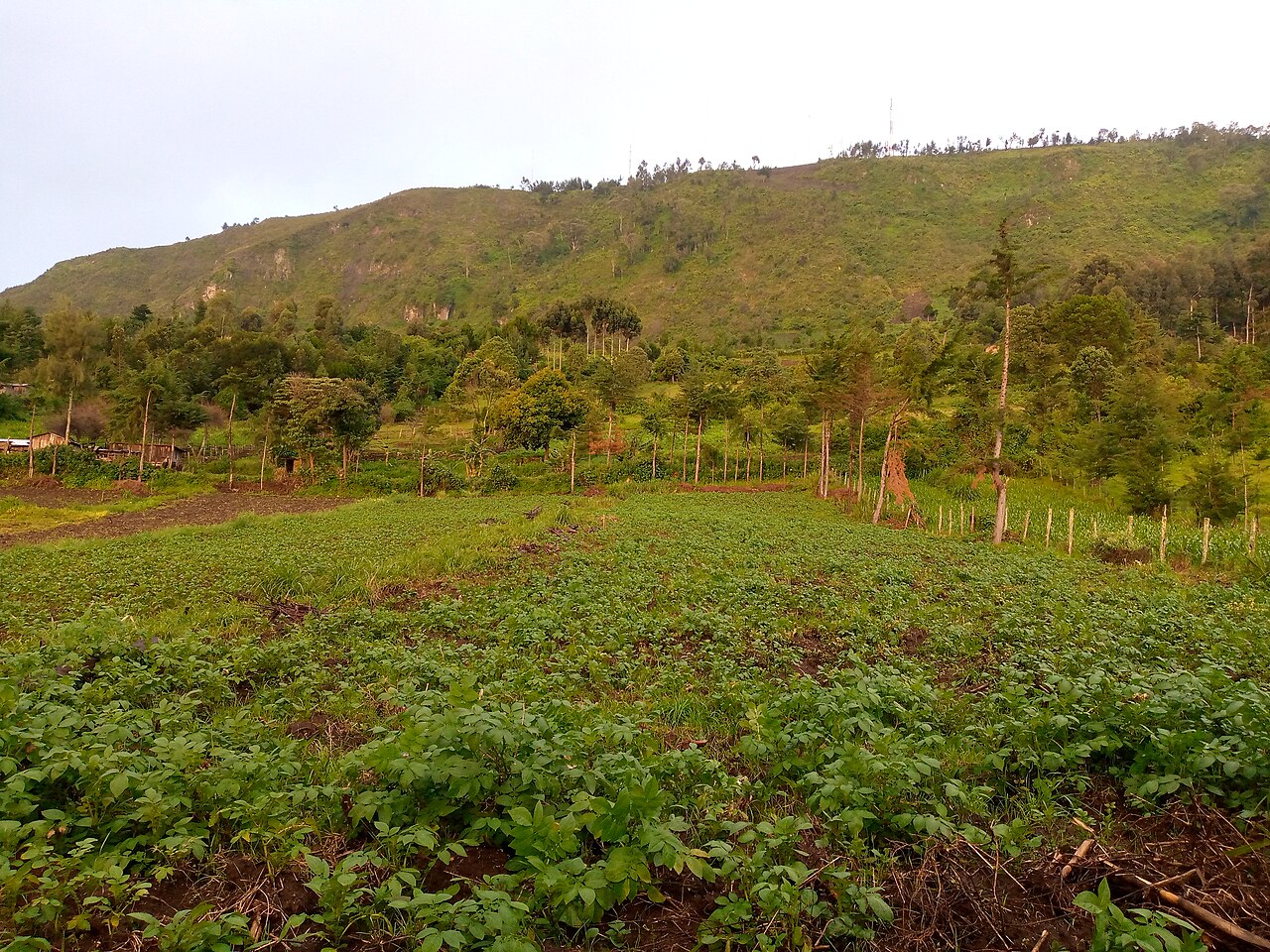
Illustrative potato farm in Nyandarua County, Kenya. Photo: Kamau Sammy / Wikimedia Commons, CC BY-SA 4.0.