Netherlands: Tolsma-Grisnich’s Optica S Optical Sorter Handles Up to 80 Tonnes per Hour and Feeds Data into Storage Management
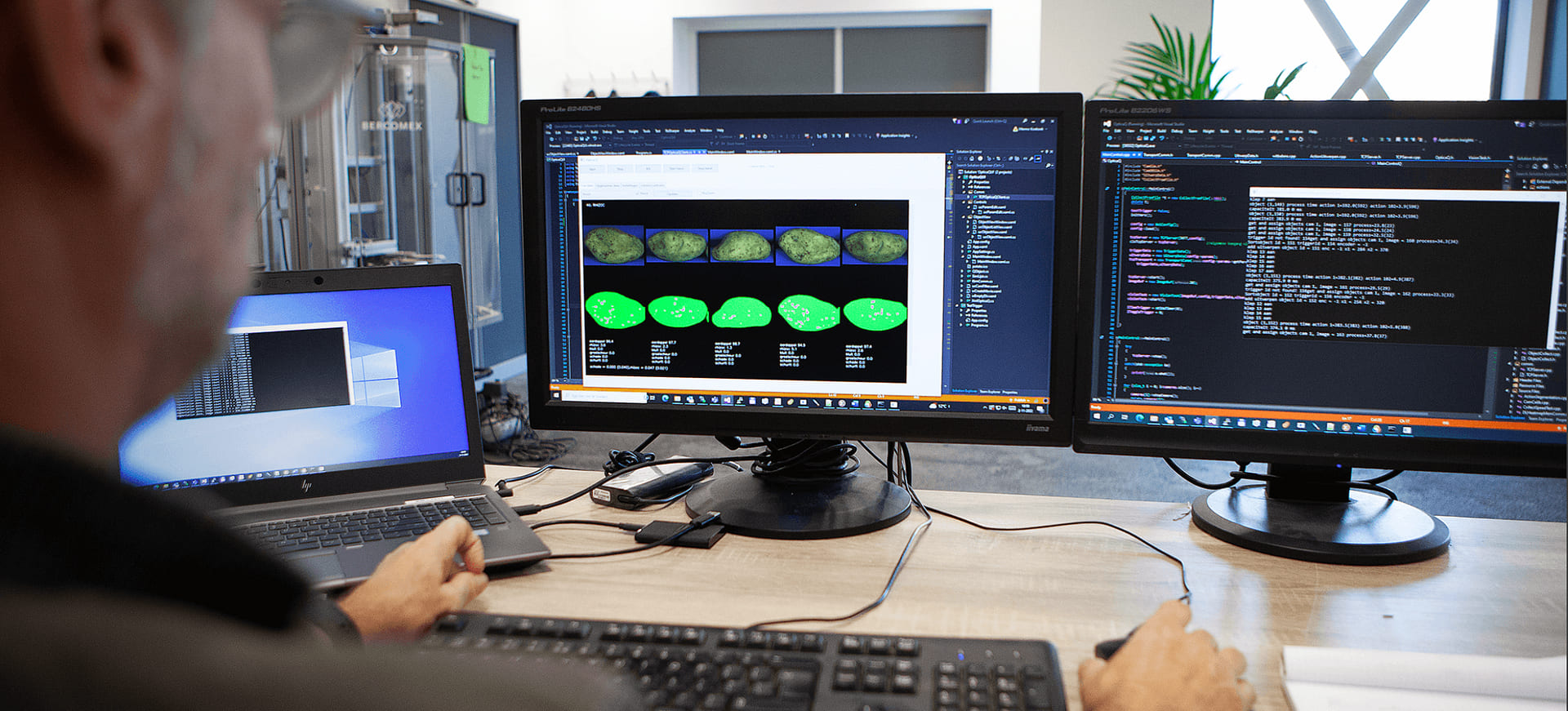
The moments when potatoes tumble into the store after harvest are among the most consequential of the whole season — and the least observed. Dutch storage technology company Tolsma-Grisnich wants to change that with the Optica S, an optical grader built to operate directly in the reception line during intake, processing product straight from the hopper at a capacity of approximately 80 tonnes per hour — fast enough to keep pace with a high-throughput storage operation.
The machine’s first job is subtraction. Using cameras, it identifies and ejects stones, clods, plant residues, foreign objects, rotten tubers and potatoes with visible defects. Removing this material early means a cleaner product goes into storage, available capacity in the shed is used for potatoes rather than debris, and the number of elements that can compromise the lot during the season is reduced — rot nests and soil inclusions being classic triggers for ventilation hot spots and disease spread.
The second job is the one that points beyond grading. As it sorts, the Optica S collects information on the quality and size distribution of the potatoes passing through, building a more precise characterisation of each individual lot. The stated goal is to link this data stream to the computer running the storage itself, so the system knows not just how much product entered the shed, but what kind of product it has to keep.
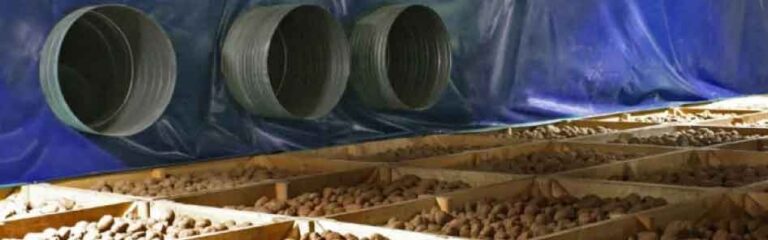
That connection opens the door to storage regimes adjusted lot by lot: ventilation, drying, cooling and holding conditions adapted to the measured quality of each batch rather than set uniformly across the building. The technology effectively pulls grading and storage closer together, allowing more precise decisions from the moment the potato crosses the threshold of the store — a shift from treating the store as a warehouse to treating it as a managed, data-fed environment.
The commercial logic is straightforward. As growers and storage operators face tighter margins, energy-cost pressure on refrigeration and ventilation, and rising expectations from buyers on consistency, the value of knowing exactly what is in each cell — and steering its microclimate accordingly — increases. An intake-line sorter that doubles as a data sensor turns a cost centre (cleaning and grading at intake) into the first control point of season-long quality management.
For Tolsma-Grisnich, whose core business has long been storage climate systems, the move extends the company upstream into intake handling — and, more strategically, positions it to own the data layer of the storage season. Whoever holds per-lot quality data at intake holds the reference point for every later claim about what happened inside the shed.
The Optica S arrives as optical grading migrates from the packhouse to the storage line, a segment where throughput and robustness have historically limited camera-based systems. An 80-tonne-per-hour rating, if confirmed in commercial operation, would put the machine in the range required for large-scale Dutch and northwest-European storage operations during the hectic post-harvest intake window. The presentation was reported by Boerenbond; details on pricing, first commercial installations and independent performance data have not yet been disclosed.
Source: Argenpapa / Boerenbond